
STYLE HISTORY · INTERIOUS JOURNAL
Art Deco: European Origins and American Evolution
Art Deco made modernity glamorous. Born from European decorative arts and named after the landmark Paris exhibition of 1925, it travelled quickly across the Atlantic. In the United States, luxury geometry met the skyscraper, mass production and a fascination with speed — creating forms that were related to European Art Deco but unmistakably American.
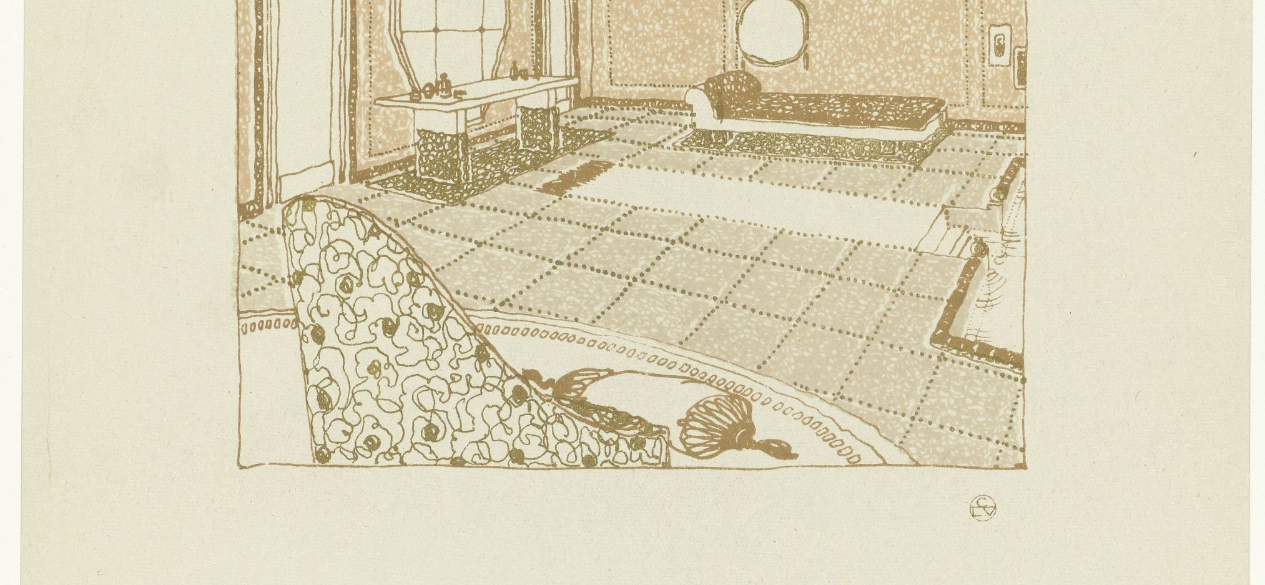
Art Deco is easy to recognise in hindsight: stepped silhouettes, geometric ornament, lacquer, polished metal, exotic veneers and images of speed. Yet the movement was never one fixed recipe. It grew from several strands of early twentieth-century European design and became internationally visible at the Exposition Internationale des Arts Décoratifs et Industriels Modernes in Paris in 1925.
Paris before the label
The name “Art Deco” came later, but by the early 1920s the ingredients were already in place. French designers were looking for a modern decorative language that could embrace new geometry without abandoning luxury and craftsmanship. Classical balance, Cubist abstraction, fashionable exoticism and sophisticated materials could all coexist within the same interior.
Émile-Jacques Ruhlmann became one of the defining figures of this high-end French expression. His furniture and interiors combined disciplined proportions with costly woods, refined metalwork and immaculate surfaces. The effect was modern, but it was not austere. Art Deco could celebrate the machine age while still depending on exceptional craft.
1925: modernity becomes an international event
The Paris exposition of 1925 gave the movement the name by which we know it today. The fair required participating work to present modern inspiration rather than reproduce historical styles. More than a showcase of furniture, it brought architecture, interiors, fashion, graphic design and decorative art together as one contemporary visual culture.
That matters because Art Deco was never only a furniture style. Its strongest interiors coordinate architecture and objects: wall planes, doors, metalwork, lighting, textiles and furniture share a controlled geometry. A zigzag or sunburst applied to an otherwise unrelated room does not create an Art Deco interior.
Art Deco works through hierarchy: geometry gives the room order, while material, sheen and ornament determine its intensity.
Crossing the Atlantic
American designers and consumers absorbed the new European language through travel, exhibitions, magazines, department stores and imported objects. At first, American modern design often followed the prestige of Parisian luxury. But the context was different, and the style began to change.
The American city supplied a powerful new motif: the skyscraper. Stepped towers, vertical emphasis and metropolitan scale turned Art Deco into an architectural image of progress. New York’s 1916 zoning law encouraged setback forms in tall buildings, and Hugh Ferriss’s dramatic studies helped visualise how those rules could create a new monumental skyline.
This exchange was two-way. European decorative ideas influenced America, while the American skyscraper became an international symbol of modernity. It is a clear example of the connected histories that Interious uses to read style.
From crafted luxury to Streamline Moderne
During the 1930s, American modernity increasingly moved beyond the luxury language associated with Paris. Industrial designers applied smooth surfaces, horizontal lines and aerodynamic forms to trains, cars, radios, appliances and interiors. Streamlining could suggest speed even when an object never moved.
This is why American Art Deco should not be treated as a direct copy of its French counterpart. The family resemblance is real, but local industry, mass production, zoning, advertising and popular culture reshaped it. The result ranges from lavish theatre interiors to restrained apartment details and the rounded forms of Streamline Moderne.
How to recognise Art Deco in a building
Start with composition rather than ornament. Look for strong geometry, symmetry or deliberate vertical emphasis, stepped forms, controlled repetition and a preference for crisp surfaces. Then inspect the details: door furniture, glazing patterns, metal grilles, lighting, typography and floor patterns can confirm the broader architectural language.
Materials matter too. High-style European examples may rely on rare veneers, lacquer, marble and fine metalwork. More everyday interpretations can use terrazzo, chrome, pressed metal, coloured glass and economical imitations. The material budget changes; the underlying geometry often remains.
Not every geometric interior is Art Deco
A common mistake is to identify a style from one fashionable motif. Geometric wallpaper, a brass lamp or a black-and-gold palette can reference Art Deco, but none of them proves that a room or building belongs to the movement. Period, place, structure and original detail need to agree.
For renovation, that distinction is useful. You do not need to recreate a 1925 Paris salon. You do need to understand which proportions and details are carrying the original architectural story before you decide what to preserve, replace or reinterpret.
Continue with How to Read Architecture, Architectural Details and Architectural Correctness.
Sources & further reading
The historical framework draws on research from the Metropolitan Museum of Art on European and American design around 1925–1940, and on the Smithsonian’s Cooper Hewitt collection. The Ruhlmann plate used here is in the Rijksmuseum and is marked public domain. Hugh Ferriss’s 1922 zoning study is held by Cooper Hewitt and released by the Smithsonian under CC0.
The Met — American Modern, 1925–1940
The Met — Design, 1900–1925
Rijksmuseum — Ruhlmann interior, 1920
Smithsonian — Hugh Ferriss, 1922