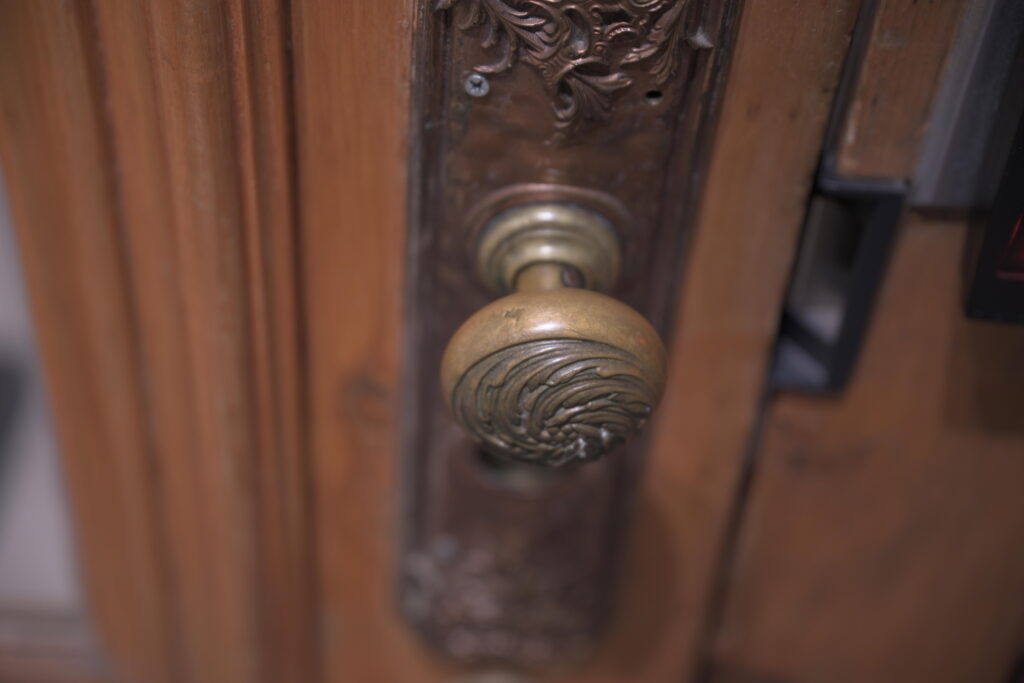
Details & Materials
Why Period-Appropriate Details Matter in Renovation
Why door hardware, mouldings, hinges and other small details play a major role in the architectural coherence of a renovation.
Read article →DETAILS

Profiles, patterns, hardware, glass, timber, stone and metal carry more information than they seem to. Interious identifies the small elements that reveal a period — and helps explain how to use them well today.
The strongest interiors are rarely defined by one object. They are built from repeated relationships: the width of an architrave, the depth of a panel, the rhythm of glazing bars, the finish of a handle and the way materials meet.
Form & profile
Mouldings, architraves, skirtings, cornices, stair parts and door panels.
Openings & hardware
Doors, windows, handles, hinges, locks, escutcheons and fittings.
Surface & pattern
Tile, parquet, wallpaper, glazing, metalwork and decorative geometry.
Material & finish
Brass, bronze, nickel, timber, stone, terrazzo, ceramic and glass.
Proportion & repetition
Widths, spacing, grids, reveals and recurring relationships that make details feel coherent.
Historically correct — documented forms, materials and details appropriate to the original period and context.
Architecturally appropriate — choices that may not be exact reproductions, but respect the proportions and design language of the building.
Contemporary interpretation — new work that understands the historical logic and translates it without pretending to be old.
Details & Materials
Why door hardware, mouldings, hinges and other small details play a major role in the architectural coherence of a renovation.
Read article →
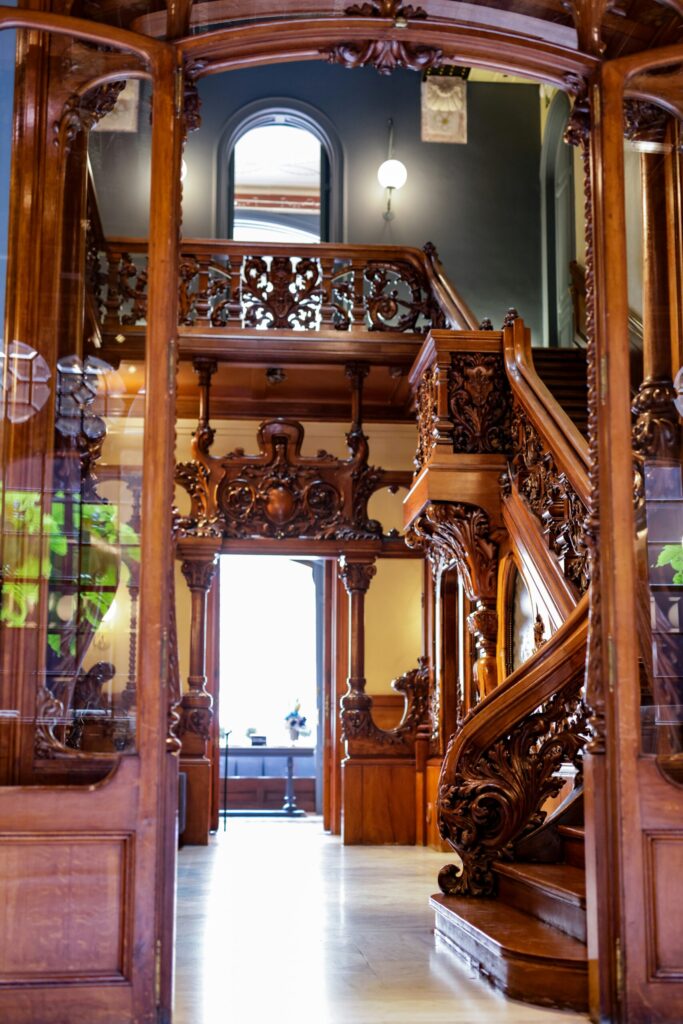
House Guides
A practical method for identifying your home’s architectural style through period, form, openings, materials, details and later alterations.
Read article →Interious is building the detail library as the bridge between architectural history and practical decisions for restoration, renovation and new work.