
DETAILS & MATERIALS · INTERIOUS JOURNAL
Why Period-Appropriate Details Matter in Renovation
Small elements carry more architectural weight than their size suggests. A door profile, hinge, handle, skirting or glazing bar can quietly reinforce the period and proportions of a building — or make an otherwise careful renovation feel strangely generic. Period-appropriate does not mean pretending everything is old. It means understanding the language before choosing what comes next.
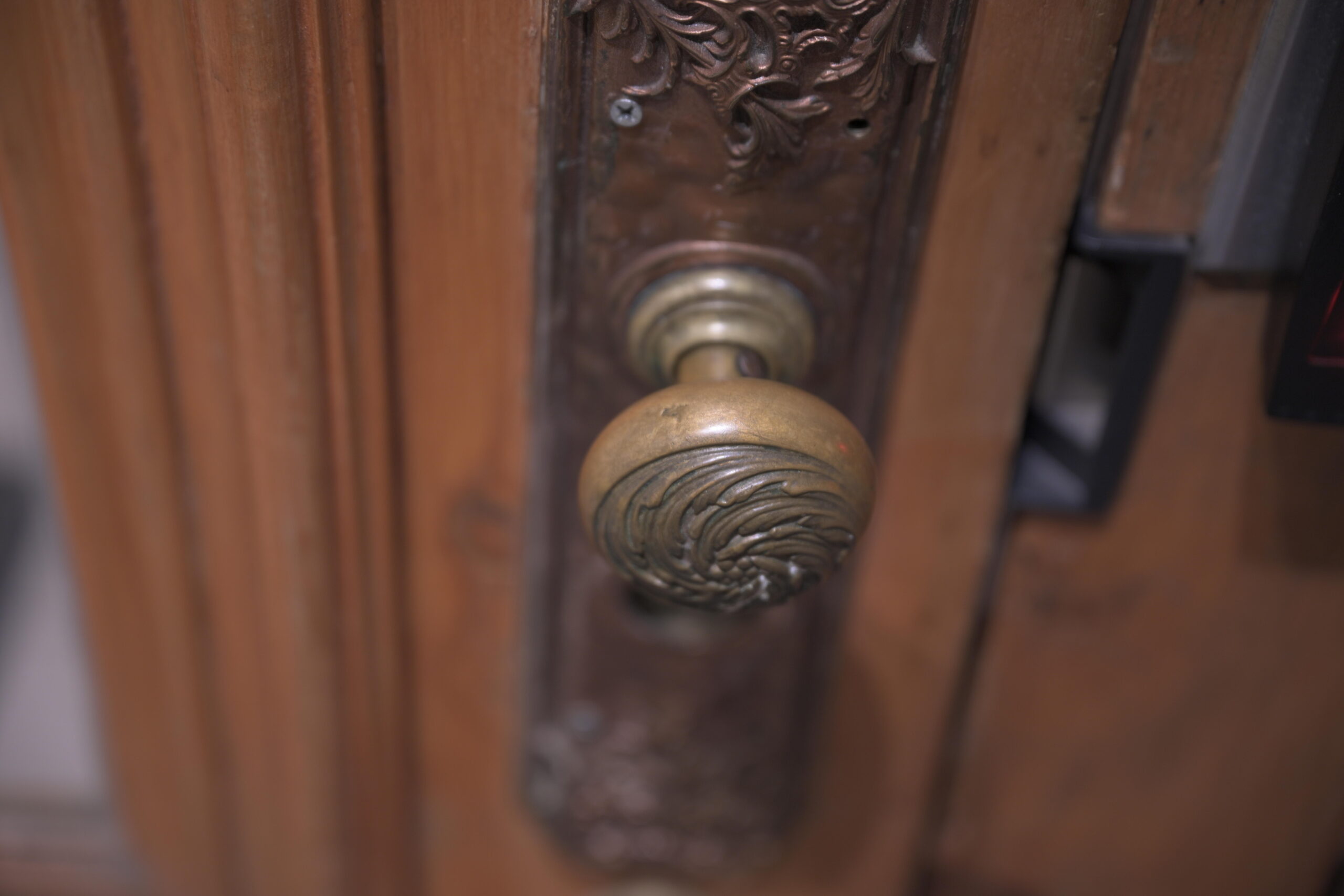
Renovation often focuses on the large decisions: layout, insulation, kitchens, bathrooms and colour. Yet the character of an older building is frequently carried by much smaller elements. Door proportions, architraves, hinges, handles, skirtings, glazing bars, vents and switches create a repeated visual rhythm. Change enough of them and the building can lose its coherence without any single alteration looking obviously wrong.
Details are the grammar of a building
Architecture has hierarchy. The massing and structure form the largest layer, but details explain how that architecture meets the human scale. A door handle is touched every day; a hinge defines how a door sits in its frame; a moulding determines the transition between wall and opening. Repetition makes these choices powerful.
This is why period-appropriate detailing is not decorative nostalgia. It is about maintaining relationships between scale, material, construction and use.
A convincing renovation does not need every object to be old. It needs the new work to understand what the existing building is saying.
Preserve evidence before replacing it
Original material has value beyond appearance. Wear, construction marks, dimensions and fixing methods can reveal how a building was made. Before replacing an element, document it. Measure profiles, photograph both visible and concealed sides, note screw positions and materials, and compare related examples elsewhere in the building.
Even an element that cannot be retained may provide the specification for a better replacement. See Detail as Evidence.
Proportion usually matters before ornament
A common renovation error is choosing a product because its decorative style sounds historically appropriate while ignoring its dimensions. A highly ornamented reproduction can look less convincing than a simple new element if its scale, projection or relationship to the surrounding joinery is wrong.
For doors, consider the width of the stile, the size of the backplate or rose, the length and projection of the handle, the position of the keyhole and the visual weight of the hinge. For mouldings, profile depth and shadow lines are often more important than a catalogue label such as “Victorian” or “Art Deco”.
Material changes the reading
Solid brass, iron, timber, steel, glass and ceramic age differently. Their surface, weight and method of manufacture become part of how a detail is perceived. A polished finish can make a historically plausible form feel unexpectedly new; an artificially distressed finish can look theatrical when the underlying proportions are wrong.
Patina should not be treated as a shortcut to authenticity. First choose the right material and form. Then decide how the finish should sit within the rest of the building.
Three legitimate levels of intervention
Interious does not assume there is only one correct answer. A useful renovation framework distinguishes three approaches.
Historically correct
Use this when strong evidence survives and the objective is restoration. Dimensions, material, construction and finish should follow the original as closely as practical.
Architecturally appropriate
Use this when an exact historical reconstruction is unnecessary or impossible. The new element should respect the building’s proportions, material logic and visual hierarchy without pretending to be original.
Contemporary interpretation
A deliberately new element can work well when it is clearly contemporary but disciplined enough not to compete with the historic architecture. Contrast is most convincing when both old and new are understood.
These three levels are developed further under Renovation & Interpretation.
Door hardware is a useful test case
Door furniture demonstrates how several layers meet in one small object. The handle has a form and ergonomic function. The rose or backplate relates to the door panel and stile. Screws and fixings reveal construction. The finish interacts with hinges, locks and other metalwork. Replacing only the handle without reading the whole door can create an inconsistent result.
The same principle applies to window hardware, cabinet fittings, vents and switches. A detail rarely exists in isolation; it belongs to a family of repeated decisions.
Avoid fake historicism
Period-appropriate does not mean adding “old-looking” decoration to make a room appear older than it is. New mouldings, ornate handles or faux-aged surfaces can weaken a building when they introduce a historical language for which there is no architectural evidence.
If little original material survives, work from the building’s period, type, location and comparable examples. If evidence remains uncertain, a restrained architecturally appropriate solution is usually more credible than an elaborate invented history.
A practical sequence for renovation
Before ordering replacements, photograph what survives and establish which elements are original. Identify repeated dimensions and profiles. Compare rooms that have been altered with rooms that have not. Decide which intervention level is appropriate. Only then choose products and finishes.
This sequence prevents a catalogue from defining the building. The building defines the brief first.
Why this matters to Interious
The objective is not historical purity for its own sake. It is architectural coherence. A house can evolve, and contemporary life demands changes. But when a renovation understands the existing hierarchy, new work can add another layer without erasing the earlier ones.
Continue with Architectural Details, Architectural Correctness and How to Date a House by Its Details.
Image sources
The brass door-hardware photograph used in this article was released under the Creative Commons CC0 public-domain dedication. The historic hinge is from the Rijksmuseum collection and is available as CC0/public-domain material.
Wikimedia Commons — Antique door handle in Quebec City
Rijksmuseum / Wikimedia Commons — Historic door hinge

